

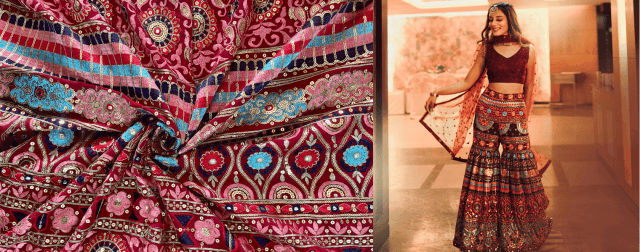
The creation of a stunning garment, whether it's an elegant evening gown or a sharp tailored jacket, relies entirely on the fabric. This guide explores the ideal material choices for high-impact pieces, covering everything from the flowing elegance of gown fabric to the structure required for the best fabric for jackets.
Grand Designs: Choosing the Perfect Gown Fabric
A gown is a statement of elegance, and the fabric for gown must achieve a specific silhouette, from sleek and form-fitting to voluminous and dramatic.
Key Gown Fabric Choices
-
For Structured, Form-Fitting Gowns: Materials that offer stretch and excellent shape retention are key.
-
Scuba Fabric Dress: Scuba fabric dress material is extremely popular for modern, structured gowns. It is a high-quality knit with excellent stretch and bounce, smoothing out contours and creating a sleek, contemporary silhouette. It requires minimal lining and resists wrinkling.
-
Heavy Crepe: Provides a beautiful, elegant drape and enough weight to fall straight, ideal for clean, minimalist designs.
-
-
For Flowing and Voluminous Gowns: To achieve a romantic, voluminous effect, select light materials.
-
Tulle/Net: Often used as an overlay for skirts, Tulle adds massive volume without significant weight.
-
Georgette/Chiffon: These fluid, lightweight materials are perfect for creating soft pleats and layers that float gracefully, a classic choice for a timeless gown fabric.
-
-
Fabric for Gown Tip: For a structured scuba fabric dress or heavy satin gown, the lining should be soft and static-resistant (like a quality modal or silk), ensuring comfort beneath the form-fitting exterior.
Structured Layering: Best Fabric for Jackets and Shrugs
The exterior layer sets the tone for the entire outfit. Choosing the best fabric for jackets is based on the garment's function—be it for warmth, tailoring, or sheer fashion accent.
Fabrics for Jacket: Functionality and Style
-
For Tailoring and Structure: The best fabric for jackets that need a sharp, tailored appearance are those with inherent stiffness and weight.
-
Wool Blends, Heavy Cotton Twill, or Brocade are ideal. These materials hold the crucial interfacing and padding required for defined shoulders and sharp lapels.
-
-
For Lightweight Shrugs: A light fabric jacket meant for layering needs exceptional drape.
-
Chiffon, Net, Georgette, or fine Rayon are suitable. These materials are airy and flow gracefully over the garment underneath without adding bulk.
-
-
For Casual Wear: A sturdy fabric jacket for casual or winter wear should prioritize durability and warmth.
-
Denim, Canvas, Fleece, or Boiled Wool are strong options that also provide texture.
-
-
Fabric Jacket Tip: Always use the correct lining (e.g., poly-satin for slip, cotton for breathability) and strong interfacing when constructing structured fabrics for jacket to ensure a professional, long-lasting shape.
The Modern Staple: Fabric Jumpsuit Construction
The fabric jumpsuit is a modern favorite, requiring a material choice that carefully balances structure for the bodice and flow for the trousers.
Key Considerations for the Fabric Jumpsuit
-
Structure vs. Flow: For a tailored or utility-style jumpsuit, fabrics like Cotton Twill or Linen offer the necessary structure. For a wide-leg or palazzo-style fabric jumpsuit, opt for materials with a fluid drape such as Georgette, Viscose Crepe, or Modal.
-
Comfort Factor: Since the jumpsuit is a one-piece garment, it must be comfortable when sitting and moving. Look for fabrics that have natural stretch (like Crepe) or incorporate Lycra/Elastane to prevent binding and ensure ease of wear.
-
Sizing and Fit: When selecting fabric jumpsuit material, remember that a slight stretch can forgive minor fit imperfections, but flowing fabrics require meticulous sizing to avoid looking bulky.
Trending FAQs on Fabric Selection
Q1: What is the primary advantage of using a scuba fabric dress for a gown?
A: The main advantage of a scuba fabric dress for a gown is its incredible shape retention and smoothing property. Scuba fabric acts like shapewear, smoothing over the body and creating a sleek, flattering, and virtually wrinkle-free silhouette that is highly popular for evening wear.
Q2: What is the best fabric for jackets that is suitable for year-round wear?
A: A medium-weight wool-linen blend or a high-quality cotton-viscose twill is the best fabric for jackets suitable for year-round wear. Wool-linen offers temperature regulation, while the cotton-viscose blend provides structure and breathability.
Q3: How do I make a fabric jumpsuit suitable for a formal evening event?
A: To formalize a fabric jumpsuit, choose luxurious materials like Silk Crepe, heavy Satin, or black Velvet. Pair the jumpsuit with rich embellishments, a lace overlay, or an attached flowing gown fabric cape.
Q4: When ordering fabric for gown, should I add extra material for a lining?
A: Yes, when ordering fabric for gown, always calculate the yardage for a separate lining. Even if the outer fabric is opaque, a quality lining is essential for comfort, slip, and structure, especially with materials like Georgette, Net, or heavy Satin.
Q5: Can I use the same fabric for jacket as I would for trousers?
A: Yes, you can use the same fabric for a jacket and trousers to create a unified suit look. Fabrics like Wool Crepe or Cotton Twill are versatile enough to work well for both pieces, forming a stylish fabric jacket and matching bottoms.